
The 5m tall Heel Stone.
Around 3200 BC the original henge, 85m in diameter, with an inner bank and outer
ditch had a central timber setting and an outlying stone (the Heel Stone) just
outside the north eastern entrance.
Around 2400 BC, 56 pits (the Aubrey Holes) were dug along the banks inner edge. Some
containing human cremations.
Next, around 2200 BC, 2 unfinished circles (diameters 22m and 26m) of Welsh bluestones
replaced the timber setting and an earthen avenue, leading to the NE entrance was added.
Then 4 rough sarsens (the Four Stations) were added at the edges of the henge bank,
forming a rectangle 79m by 34m.
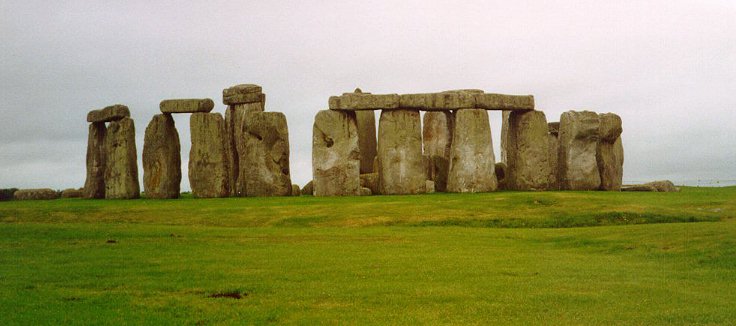
Sometime around 2000 BC the 2 bluestone circles were removed and the lintelled sarsen ring (diameter 30m) of 30 uprights (each 4m high) with an internal horseshoe of 5 trilithons (open towards the NE henge entrance) was built.
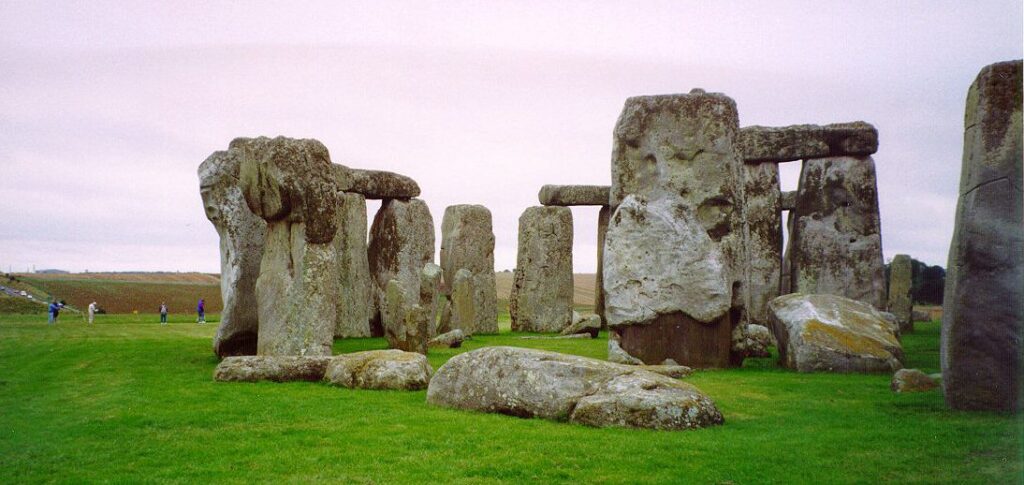
1600 BC, the bluestones were returned.
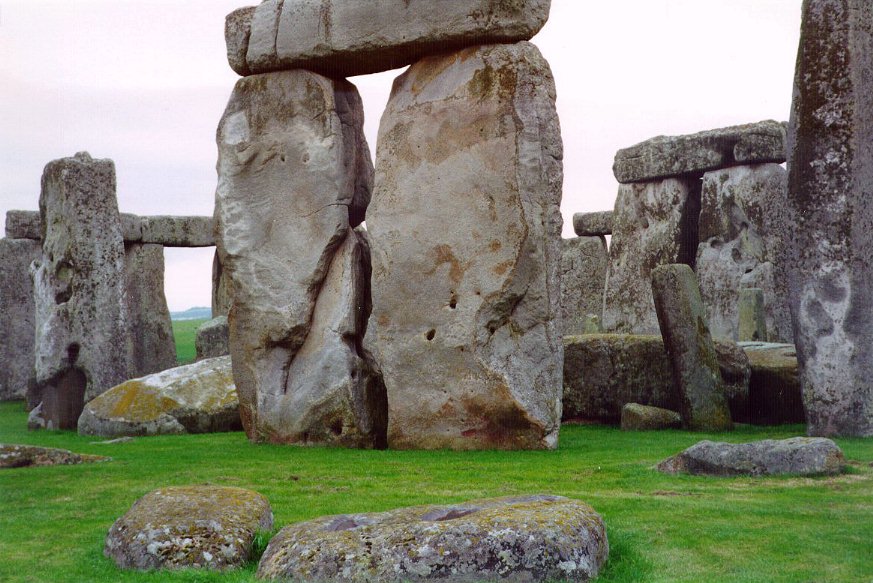
The western trilithon.
The Great Trilithon (the remaining upright of which is on the right hand edge of this picture) stood 7.3m high.
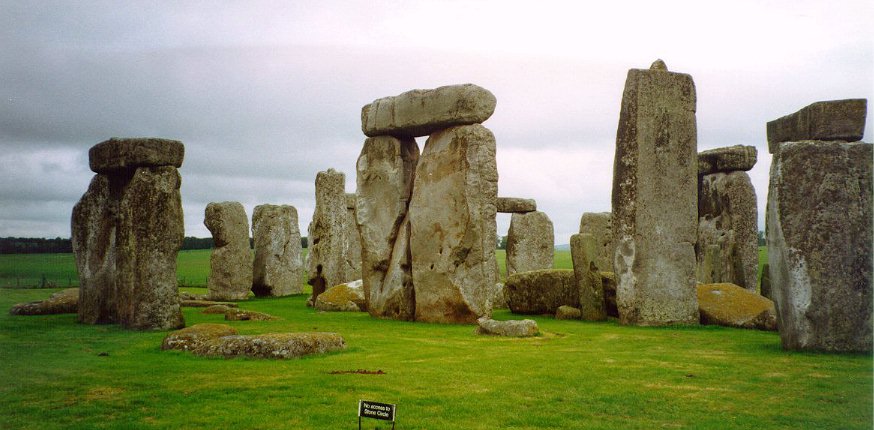
Made of stone, using woodworking techniques. Notice the tenon on top of the remaining upright of the Great Trilithon.